

Design Assist vs Delegated Design for Framing
A framing package can be fully engineered and still create jobsite friction if the team waits too long to resolve how it fits the building. That is the practical difference at the center of design assist vs delegated design. Both approaches can be appropriate for cold-formed steel framing. But they solve different problems, happen at different points in the project, and place different responsibilities on the project team.
For developers, architects, general contractors, and owners, the question is not which label sounds more comprehensive. The question is whether the framing system is being coordinated early enough to protect the schedule, reduce field decisions, and prevent costly scope gaps.
What Design Assist Means in Cold-Formed Steel Framing
Design assist is an early, collaborative preconstruction process. The framing partner works with the architect, structural engineer, and contractor while the design is still developing to evaluate constructability, system selection, cost, sequencing, and coordination.
The purpose is not to replace the architect or engineer of record. It is to bring fabrication, installation, and engineering knowledge into the project before drawings are locked and procurement decisions become expensive to reverse.
For a panelized cold-formed steel scope, design assist may address wall panel breaks, truss layouts, bearing conditions, header requirements, deflection track, load paths, exterior-wall geometry, and interfaces with structural steel, concrete, MEP systems, and facade assemblies. These are not abstract details. They determine whether panels can be manufactured efficiently, delivered in the right sequence, and installed without field modification.
A strong design-assist process identifies conflicts when they are still drawing issues, not jobsite issues. If a corridor bulkhead clashes with a truss depth, or a transfer condition creates an unclear load path, the team can resolve it through coordination rather than an RFI issued after crews are mobilized.
Design Assist Is a Decision-Making Advantage
Early framing input gives the project team more options. Panel dimensions can be adjusted before architecture is issued for permit. Repetitive room layouts can be optimized before they become fixed. Connections and interfaces can be clarified before multiple trades price different assumptions.
That flexibility matters most on multifamily, hospitality, student housing, senior living, and other repeatable building types where small coordination failures multiply across floors and units. One unresolved condition may look minor on a plan. Repeated 80 times, it becomes a schedule and cost problem.
Design assist also improves budget confidence. A framing partner can evaluate whether the intended system supports manufacturing and installation efficiency, rather than pricing raw material quantities against an incomplete set of documents. The result is a more informed path from concept to an installation-ready framing package.
What Delegated Design Means
Delegated design is a contractual and technical assignment. It typically requires the specialty contractor, fabricator, or delegated engineer to complete engineering for a defined portion of the work based on design criteria and performance requirements established in the contract documents.
In cold-formed steel framing, delegated design often includes stamped calculations and shop drawings for the framing system, trusses, panels, connections, and related components within the stated scope. The delegated engineer designs that system to meet the applicable codes, loads, and project criteria.
This is a critical distinction: delegated design does not erase the responsibilities of the design team. The architect and engineer of record must establish a clear basis of design, define the intended structural concept, identify loading and performance criteria, and coordinate the delegated scope with the overall building. The delegated engineer then completes the specified system design within those parameters.
When the documents are clear, delegated design can be an efficient way to move specialized engineering into the hands of the party responsible for fabrication and installation. When the documents are vague, it can create a dangerous gap. A note that says “design by specialty engineer” is not a substitute for defined loads, support conditions, interfaces, lateral assumptions, or responsibility boundaries.
Delegated Design Is an Engineering Delivery Method
Delegated design answers a specific question: who completes and seals the detailed engineering for this framing scope? It does not automatically answer the broader questions of constructability, architectural coordination, production sequencing, or trade interfaces.
Those questions may be addressed during delegated design, but only if the scope, schedule, and team workflow support them. If the framing contractor is brought in after construction documents are issued and bid, the team may have less ability to improve the underlying system. The work can still be engineered correctly, but correcting late-discovered conflicts may require revisions, approvals, and schedule recovery.
Design Assist vs Delegated Design: The Core Difference
The simplest way to separate design assist vs delegated design is timing and purpose. Design assist happens early to improve decisions before they become constraints. Delegated design happens when detailed engineering responsibility for a defined system is assigned.
Design assist is proactive. It asks, “Can this framing system be built, coordinated, and delivered efficiently?” Delegated design is accountable. It asks, “Who is responsible for engineering this defined system to the project criteria?”
The strongest projects often use both. The framing partner joins early enough to identify constructability and coordination risks, then completes delegated engineering once the system requirements are established. That sequence creates continuity from preconstruction through manufacturing and installation.
Treating the two terms as interchangeable creates avoidable exposure. A contractor may assume that delegated design includes early coordination that was never contracted. An architect may assume the specialty engineer will resolve an architectural interface that remains outside the delegated scope. A fabricator may price a system based on assumptions that differ from the engineer of record’s intent.
Every one of those assumptions can become an RFI, change order, delayed release, or field workaround.
When Design Assist Delivers the Most Value
Design assist is especially valuable when the building has complexity that is difficult to capture in a conventional material takeoff. That includes irregular floor plans, mixed structural systems, high repetition with tight tolerances, aggressive schedules, prefabricated assemblies, complicated exterior-wall transitions, and projects where multiple trades occupy the same ceiling and wall zones.
It is also valuable when the project team wants to panelize rather than stick-frame in the field. Panelization shifts work from the jobsite into a controlled manufacturing environment, but it requires decisions to be made earlier. Openings, headers, connections, panel breaks, transport limitations, and installation sequence need resolution before production begins.
For a general contractor, early engagement can turn framing into a schedule-control strategy. Instead of waiting for field crews to interpret incomplete conditions, the team can coordinate the system digitally, release components in planned sequences, and reduce labor exposure on site.
That does not mean design assist is necessary on every project. A small, simple building with conventional geometry and well-developed documents may move directly into delegated design with limited risk. The project should dictate the level of early collaboration, not a preference for process.
How to Define the Scope Without Creating Gaps
Clear scope language is where disciplined teams protect the project. Before design assist or delegated engineering begins, establish what is included, who provides the governing criteria, and how decisions will be reviewed and approved.
The team should define the structural design responsibility, including gravity, lateral, connection, and support assumptions. It should also identify whether the framing provider is responsible for panel engineering, truss engineering, delegated calculations, stamped documents, shop drawings, BIM coordination, fabrication, delivery, installation support, or any combination of those services.
Interfaces deserve equal attention. Cold-formed steel framing meets concrete slabs, structural steel, roof systems, curtain wall, windows, firestopping, mechanical penetrations, and other assemblies that may be designed and installed by different parties. If those transitions are not assigned clearly, the field becomes the default coordination department.
The review process should be equally direct. Establish the model and drawing milestones, required inputs, turnaround expectations, approval authority, and release dates tied to manufacturing. Coordination is only useful when decisions are made in time to support production.
Build the Framing System Before the Jobsite Has to Solve It
The real value of an integrated framing partner is not simply that engineering, detailing, and manufacturing are available under one roof. It is that the information moves through one controlled workflow. Architectural intent, structural criteria, constructability review, digital coordination, stamped engineering, panel production, and delivery sequencing should reinforce one another.
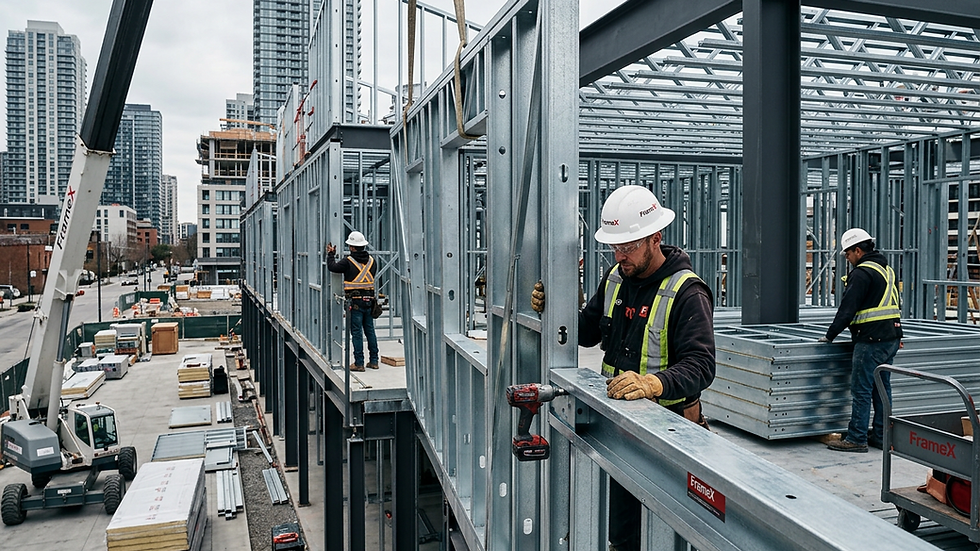
That is how a project moves from drawings to an installation-ready system with fewer unknowns. Frame X Systems applies this approach to resolve the framing package before components reach the site, giving field teams a clearer installation path and project leaders more control over schedule risk.
Choose design assist when early decisions can improve the building. Use delegated design when detailed engineering responsibility must be formally assigned. Use both when the project needs early coordination and engineered accountability. The objective is not a better label in the subcontract. It is a framing system solved before it hits the jobsite.


Comments