
How to Prevent Framing Change Orders
- steve107563
- Jul 4
- 6 min read
A framing change order rarely starts in the field. It starts weeks earlier, when a detail stays unresolved, a trade conflict goes unnoticed, or the framing scope is bought as material instead of a coordinated system. If you want to know how to prevent framing change orders, the answer is not tighter paperwork after install starts. The answer is resolving the framing package before production and before labor is exposed.
That matters because framing sits in the middle of everything. Structure, envelope, MEP routing, fire ratings, deflection, openings, backing, and finish tolerances all converge there. When those decisions are deferred, the jobsite becomes the place where design intent, field conditions, and schedule pressure collide. Change orders follow.
Why framing change orders keep happening
Most framing change orders come from one of three sources: incomplete scope definition, poor coordination, or late decision-making. On many projects, all three are present at once.
The first problem is scope ambiguity. A bid set may be enough to carry budgeting, but it is rarely enough to carry fabrication and installation without interpretation. If the documents leave room for assumptions around gauges, connection design, head conditions, backing, shaftwall interfaces, or delegated engineering responsibilities, someone will fill in the gaps later. That later moment is expensive.
The second problem is disconnected trades. Framing is affected by mechanical penetrations, electrical distribution, plumbing stacks, facade support, and interior finish requirements. If the framing team is not coordinating against real trade information, it is building around placeholders. Placeholders turn into revisions once actual dimensions and routing show up.
The third problem is timing. Projects often push for procurement speed, then try to solve constructability during production or after material is on site. That approach may feel fast at purchase, but it creates drag later through RFIs, rework, labor inefficiency, and schedule disruption.
How to prevent framing change orders before buyout
Preventing change orders starts with buying the right scope. If the procurement decision is based on raw material pricing alone, the project is not purchasing certainty. It is purchasing exposure.
A complete framing scope should define design responsibility, engineering deliverables, panelization assumptions if applicable, connection strategy, delegated calculations, and field installation expectations. It should also clarify what is included for openings, embeds, clips, backing, bridging, and special conditions. When these items are treated as secondary details, they become primary cost events later.
This is where experienced preconstruction matters. A proper constructability review should pressure-test the documents before the job is committed. Are wall types fully coordinated with structure and envelope? Are head-of-wall and slab edge conditions actually buildable? Are truss layouts aligned with MEP zones and load paths? Are high-risk areas such as soffits, shafts, parapets, and amenity transitions fully resolved? If not, the project should address those gaps while changes are still inexpensive.
Owners and GCs often want a hard number early. That is reasonable. But there is a difference between early budget pricing and buying an underdefined scope as if it were complete. The first supports planning. The second invites change orders.
Coordination is where most framing risk gets solved
If you are serious about how to prevent framing change orders, coordination cannot be a side task. It has to be a defined project phase.
Framing should be coordinated in the same environment where other building systems are being resolved. That means using coordinated models, current backgrounds, and disciplined review cycles that force decisions while there is still room to make them. The goal is simple: remove field interpretation.
When framing is digitally coordinated, teams can identify clashes at slab edges, window openings, corridor soffits, MEP mains, shaft transitions, and roof conditions before fabrication starts. They can verify dimensions against the architectural set, confirm bearing assumptions, and align wall and truss geometry with actual building constraints. That reduces RFIs because the questions get answered upstream.
There is also a business benefit here that project teams sometimes underestimate. Fewer unresolved conditions mean fewer schedule interruptions. Crews install faster when they are not stopping to wait on clarifications, redesigning in place, or working around mismatched trade work. The direct savings are obvious. The schedule protection is often even more valuable.
The cost of unresolved delegated design
Delegated design is often where change orders quietly take shape. The contract documents may indicate performance intent, but the framing engineer still has to finalize member sizing, connections, bracing, and system behavior. If those delegated requirements are not integrated into the broader building design early, the engineered solution may force downstream revisions.
That does not mean delegated design is a problem. It means it must be brought forward. Stamped structural packages should not arrive as a late-stage surprise to the rest of the team. They should be coordinated against architectural, structural, and trade realities before release.
Manufacturing-ready information reduces field cost
There is a major difference between a framing package that is theoretically designed and one that is actually ready for production and installation. Projects get into trouble when teams confuse those two states.
Production-ready framing has clear dimensions, verified openings, coordinated connection details, and installation logic that reflects real jobsite sequencing. That is especially important with panelized wall systems and truss assemblies. Factory-built components perform best when the information feeding production is complete. If not, the site inherits the uncertainty.
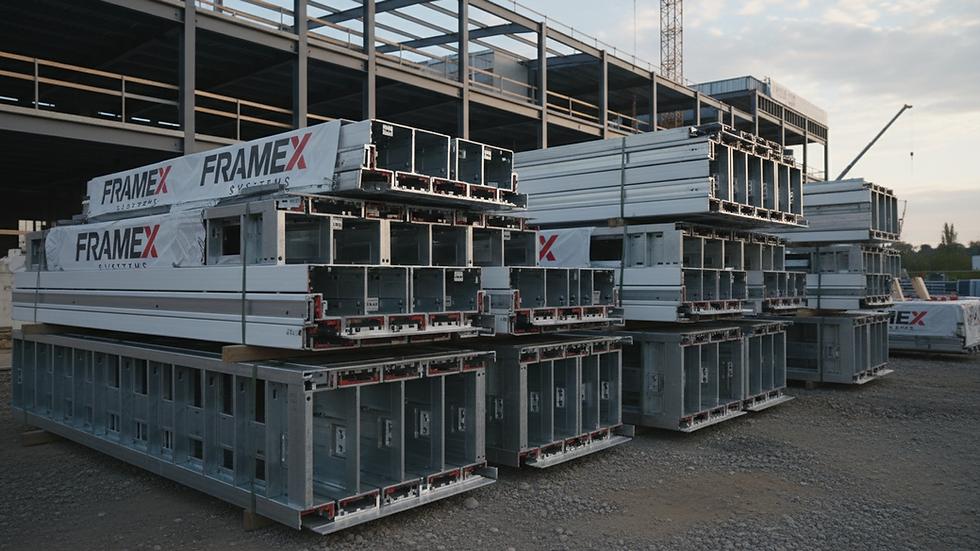
This is one reason system-based delivery reduces change-order exposure. A coordinated framing provider is not just shipping steel. It is translating design intent into a buildable, engineered package with manufacturing discipline behind it. That approach narrows the gap between what was drawn, what was approved, and what arrives on site.
For commercial projects under schedule pressure, that gap is where money gets lost.
Field verification still matters
Even the best digital coordination does not eliminate the need for field awareness. Existing conditions, slab tolerances, anchor placement, and sequencing constraints can still affect framing execution. The point is not to pretend surprises never happen. The point is to reduce avoidable surprises and isolate the real ones.
That requires disciplined verification before release. Teams should confirm dimensional control points, review site readiness, and align installation sequencing with adjacent trades. If framing is delivered before the structure is ready, or if access and staging are not planned, installation inefficiency can trigger the same cost pressure as a design change.
There is always an it-depends factor here. A garden-style multifamily project has different risk points than a hospitality podium or senior living build with heavy MEP density. The process should adjust to the building type, but the principle stays the same: solve what can be solved before fabrication and before labor mobilizes.
Contract strategy affects change-order frequency
Some change orders are not technical failures. They are commercial failures.
If the agreement does not clearly define what constitutes a revision, how approvals are managed, and when design changes transfer cost and schedule impact, even well-run projects can end up in disputes. That is why framing scope should be documented with unusual clarity. Assumptions should be visible, exclusions should be explicit, and revision control should be active from preconstruction forward.
This protects both sides. The contractor gets a cleaner execution path, and the owner or GC gets better cost predictability. Nobody benefits when the scope is vague until the field forces a decision.
What the best projects do differently
The cleanest framing projects are not the ones with perfect drawings on day one. They are the ones that make room for early technical engagement. They bring framing into the conversation before procurement is treated as complete. They review constructability seriously. They coordinate delegated engineering with the rest of the building. They release production only after the package is genuinely resolved.
That is the practical answer to how to prevent framing change orders. You do not manage them away after they appear. You remove the conditions that create them.
On projects where speed, labor exposure, and cost control matter, that upstream discipline changes the outcome. It leads to fewer RFIs, less field modification, cleaner installs, and more reliable schedules. At Frame X Systems, that is the point of delivering a complete framing system rather than a stack of material and unanswered questions.
The sooner the framing package becomes a coordinated execution strategy instead of a procurement placeholder, the fewer expensive decisions your team will make under pressure.


Comments