
National Framing Contractor Selection Tips
- steve107563
- Jul 8
- 6 min read
When a framing partner is selected too late or evaluated too narrowly, the job usually pays for it in the field. That is why national framing contractor selection should start before procurement becomes a price exercise. On complex commercial work, the real question is not who can supply steel or labor. It is who can remove uncertainty before framing starts.
For developers, general contractors, architects, and owners managing projects across multiple markets, that distinction matters. A framing scope touches structure, skin, MEP coordination, fire and acoustics, access, sequencing, crane time, and labor planning. If those interfaces are still being worked out after award, the framing package is already behind. A national partner should reduce those variables, not inherit them.
What national framing contractor selection actually decides
Most teams treat framing procurement as a trade buyout. In practice, it is a project control decision. The contractor or systems provider you choose will influence how early conflicts are found, how accurately the scope is defined, how much field interpretation is left to installers, and how predictable the schedule becomes once material starts arriving.
That is especially true when projects repeat across regions or when the portfolio includes multifamily, hospitality, student housing, senior living, or other schedule-sensitive building types. National reach is not just about shipping capability or a broad labor footprint. It is about whether one partner can support consistent execution standards across different jurisdictions, teams, and project conditions.
A low number can still lead to a high-cost framing package if coordination gaps drive RFIs, redesign, resequencing, stacked trades, or rework. The better selection process looks past line-item price and asks a harder question: what are we really buying?
National framing contractor selection should start with delivery model
Not every framing contractor delivers the same thing, even if the bid form makes it look that way. Some firms are labor-led. Some are material suppliers. Some provide delegated engineering. Others deliver a coordinated framing system that is designed, detailed, manufactured, and sequenced for installation.
Those are not minor differences. They change where risk lives.
If a contractor is primarily installing field-cut material, more problem-solving shifts downstream to the jobsite. That can work on simpler buildings or projects with schedule float and stable labor. It is far less reliable when the job is dense, the schedule is compressed, and multiple trades are converging floor by floor.
A fully resolved system changes the conversation. Instead of buying pieces and hoping field conditions cooperate, the team buys a process that addresses constructability, digital coordination, engineering, fabrication, and delivery timing before installation begins. That usually means fewer open questions, cleaner handoffs, and less dependence on field improvisation.
So the first step in national framing contractor selection is simple: define whether you need a trade installer, a material source, or a full execution partner. If the project depends on certainty, that distinction is not academic.
Evaluate preconstruction depth, not just production capacity
National providers often market scale first. Scale matters, but capacity alone does not protect a schedule. A contractor with broad geographic coverage can still create downstream friction if preconstruction is shallow.
What matters earlier is whether the team can review plans with enough rigor to catch scope gaps, sequencing issues, structural assumptions, and coordination conflicts before they become cost events. That includes design assist support, constructability review, BIM coordination, delegated engineering when required, and a disciplined approach to submittal development.
This is where many selections go sideways. Buyers compare pricing from firms that are not pricing the same level of resolution. One number may assume extensive field adjustment. Another may include detailed coordination and engineered assemblies. The lower proposal can appear competitive because unresolved work has simply been pushed out of sight.
A better review process asks what the contractor does before fabrication begins. How are conflicts surfaced? Who owns model coordination? How are architectural intent, structural requirements, and field sequencing aligned? How much of the installation logic is solved in advance?
Teams that ask those questions early usually make better awards. They are comparing operating models, not just quotes.
The right partner reduces field decisions
Field crews should install. They should not spend critical path time interpreting incomplete details, waiting on answers, or correcting avoidable clashes. Yet that is still common when framing packages are bought as commodity scope.
A strong national framing partner reduces the number of decisions left to the field. That means panel layouts are coordinated. Truss conditions are defined. Openings and embeds are accounted for. Delivery aligns with sequence. Structural documentation supports approvals and installation. The package arrives with a clear path to execution.
This is where digitally coordinated panelized systems can outperform traditional methods, particularly on repeatable unitized projects or structures with tight schedule requirements. The value is not just factory production. The value is that major framing questions are addressed upstream, when changes are cheaper and faster to manage.
That approach also helps general contractors manage labor volatility. If the framing solution is more installation-ready, the project becomes less exposed to variable field productivity, skill gaps, and on-the-fly adjustment. In a labor-constrained market, that is a practical advantage.
Risk areas to test during contractor evaluation
A serious selection process should pressure-test a contractor in the areas where projects usually lose time and money.
Start with scope clarity. Can the contractor clearly define what is included, what assumptions drive the price, and where interfaces with structure, envelope, and MEP begin or end? Ambiguity at award rarely gets cheaper later.
Then look at coordination ownership. Who is responsible for identifying conflicts between architectural details, structural design, and field installation conditions? If that answer is vague, expect more RFIs and reactive decision-making.
Engineering support is another major separator. On complex work, stamped calculations and delegated design capability are not paperwork items. They are schedule items. If engineering is delayed or disconnected from fabrication, production slips and installation follows.
Finally, evaluate manufacturing and logistics discipline. National capability should include more than the ability to ship product. It should include production planning, sequencing by area or floor, packaging that supports field flow, and delivery timing that matches actual site constraints. Otherwise, off-site fabrication can still create on-site congestion.
Why geography matters less than process consistency
In national framing contractor selection, buyers often focus on branch locations, installer coverage, or freight reach. Those matter, but process consistency matters more.
A contractor can have local presence in many markets and still produce uneven results if estimating, detailing, engineering, fabrication, and field execution are disconnected. On the other hand, a disciplined national system can create better outcomes across markets because the workflow is repeatable, documented, and coordinated from the start.
That consistency is valuable for owners and developers with pipeline work. It supports cleaner budgeting, better forecasting, and more reliable execution from project to project. It also helps architects and engineers because recurring coordination standards reduce noise and shorten the path to approval.
For GCs, process consistency often shows up in fewer surprises. Fewer last-minute substitutions. Fewer gaps between approved documents and delivered material. Fewer situations where the site team is forced to solve problems that should have been handled in preconstruction.
What a strong award decision looks like
The best award decisions usually do not come from the cheapest buy. They come from the clearest path to execution.
That means the selected partner has shown how the project will move from plan review to engineering, from digital coordination to manufacturing, and from shipment to field installation. The team understands where risk is being removed. The assumptions are visible. The interfaces are managed. The schedule logic is credible.
That is the difference between buying steel and buying a framing system.
For many commercial teams, that distinction is becoming harder to ignore. Schedule compression is not easing. Labor is not getting simpler. Trade coordination is not becoming less dense. The projects that perform best are often the ones that solved framing early, with a partner built to do more than furnish material.
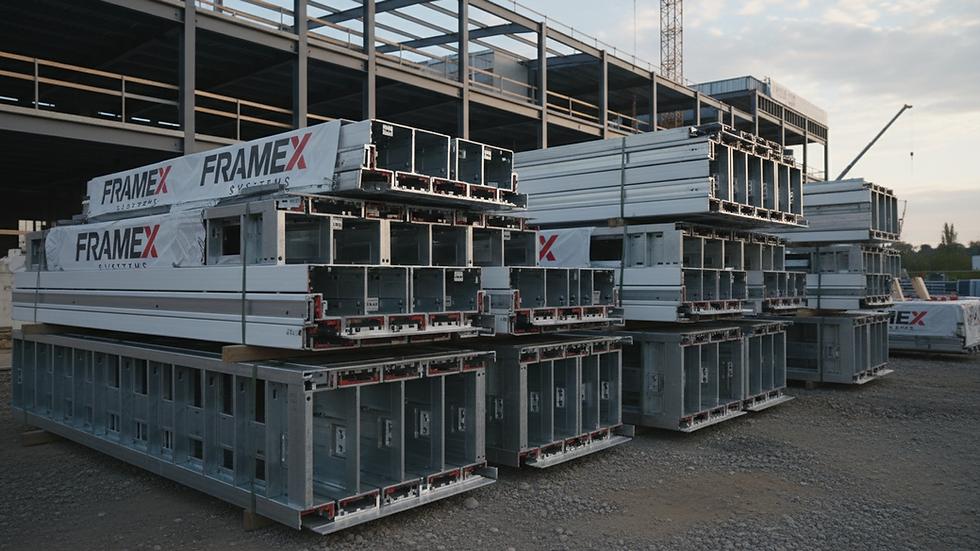
Frame X Systems operates in that lane by delivering installation-ready cold-formed steel framing packages that combine design assist, coordination, engineering, manufacturing, and national delivery into one workflow. For buyers who need control rather than commodity procurement, that model fits the job more closely.
A good selection process should leave you with fewer questions after award, not more. If a framing partner cannot show how risk is being reduced before the first delivery hits the site, keep looking. The safest choice is usually the one that has already solved the problems your field team has not seen yet.


Comments