
Non Combustible Framing Benefits Explained
- steve107563
- Jul 2
- 6 min read
A project team usually starts talking seriously about framing after the floor plans are set and the structural loads are known. That is often too late. Many of the most valuable non combustible framing benefits show up much earlier - during design assist, code review, coordination, procurement planning, and installation sequencing. By the time framing hits the jobsite, the real question is no longer just what the studs are made of. It is whether the framing package removes uncertainty or adds to it.
For commercial and multifamily builders, that distinction matters. Schedule pressure is constant. Labor is uneven. Trade stacking is tighter than ever. A framing system that supports fire-resistance requirements while also improving coordination can protect far more than life safety. It can protect the budget, the sequence, and the handoff between design and field execution.
Why non combustible framing benefits matter on real projects
Noncombustible construction is often discussed in code terms, but owners and builders feel it in operational terms. When a project calls for rated assemblies, greater density, or a building type where combustible materials create limitations, framing selection becomes a business decision. Steel framing is frequently chosen because it aligns with those requirements without forcing the team into workarounds later.
That does not mean every project gets the same value from it. A low-complexity building with generous schedule float may experience the benefits differently than a five-story multifamily project with podium conditions, tight urban access, and multiple MEP trades moving at once. The point is not that noncombustible framing solves everything on its own. The point is that it creates a more stable starting point when the project team uses it as part of a coordinated system.
Fire performance is the obvious benefit - but not the only one
The most recognized advantage is straightforward. Noncombustible framing supports assemblies designed to meet fire-resistance requirements common in commercial, hospitality, student housing, senior living, and multifamily work. That matters for life safety, compartmentation, and compliance.
But reducing the conversation to fire alone misses what experienced teams care about. Fire performance is essential, yet the bigger project impact often comes from predictability. Steel framing does not contribute fuel load the way combustible framing can. In practical terms, that gives architects, engineers, and code consultants a more consistent basis for assembly design. It can also simplify decisions around rated wall types, shaft walls, corridor conditions, and separation requirements.
There is still nuance here. Fire rating performance depends on the full assembly, not just the framing member. Gypsum layers, insulation, fastening patterns, penetrations, and detailing all matter. Choosing noncombustible framing is not a shortcut around coordination. It works best when the full wall system is resolved before fabrication and delivery.
Non combustible framing benefits extend to dimensional stability
Framing problems rarely announce themselves on day one. They show up later as bowed walls, finish issues, call-backs, and tolerance conflicts between trades. One of the more practical non combustible framing benefits is dimensional consistency. Cold-formed steel does not shrink, split, or warp the way combustible materials can under changing moisture conditions.
That stability helps protect downstream work. Drywall crews benefit from straighter planes. Window and door openings hold more reliably when the framing package is detailed and manufactured correctly. Exterior cladding interfaces can be planned with more confidence. In projects where tolerances are already tight, that consistency reduces the number of field fixes that quietly erode schedule and labor productivity.
This is especially valuable in panelized workflows. When wall panels and truss systems are digitally coordinated, fabricated to specification, and shipped installation-ready, dimensional control becomes more than a material attribute. It becomes a project control tool.
Better coordination is where the value compounds
The biggest gains often come from what happens before anything is installed. A noncombustible framing system that is engineered, coordinated in BIM, and reviewed for constructability removes guesswork from the field. That is where owners and general contractors start seeing real leverage.
When framing is treated as a system rather than a commodity order, the team can address connection logic, load paths, opening conditions, backing requirements, truss geometry, and trade interfaces before production. RFIs decline because many of the usual framing questions have already been answered. Rework drops because members are not being cut and modified in the field to solve issues that could have been resolved during coordination.
This is also where schedule control improves. Less field interpretation means fewer stalls. Fewer stalls mean less trade interference. On compressed projects, the ability to install pre-engineered wall and truss components in a defined sequence can create a cleaner flow across the building.
Labor efficiency is a major, and often underestimated, benefit
Labor shortages are not theoretical. Most commercial builders are managing them every day. That changes how framing should be evaluated. Material cost alone is no longer the only benchmark. The better question is how the framing package affects total installed cost and labor exposure.
Factory-built, installation-ready framing systems reduce the amount of field fabrication required. Crews spend less time laying out every wall from scratch, sorting raw material, and making on-the-fly adjustments. Installation becomes more repeatable. Supervision gets easier because the work is more defined.
That does not eliminate the need for skilled labor. It changes where that labor adds value. Instead of burning hours on avoidable site work, crews can focus on assembly, alignment, and progress. For builders trying to protect production with smaller or less experienced crews, that shift matters.
Waste reduction and cleaner jobsites are real operational gains
Waste is often accepted as part of framing. It should not be. Loose material procurement, field cutting, damaged stock, and design changes all create avoidable loss. A coordinated noncombustible framing package can reduce that waste by aligning engineering, manufacturing, and delivery with the actual building conditions.
This improves more than disposal costs. Cleaner jobsites are safer jobsites. They are easier to stage, easier to inspect, and easier to keep moving. When components arrive identified, sequenced, and ready for installation, material handling becomes simpler. Less clutter means fewer chances for damaged product, misplaced members, and inefficient crew movement.
For developers and owners, this is not just a housekeeping issue. Waste reflects process quality. Projects with less material confusion usually have better visibility, stronger sequencing, and fewer late surprises.
The trade-offs depend on how the framing is procured
Not every steel framing scope delivers the same outcome. This is where buyers need to look past the material itself. Raw noncombustible framing supplied without deep coordination can still create field conflict. If the engineering is incomplete, if the panelization logic is weak, or if delivery sequencing is disconnected from the install plan, many of the expected benefits get diluted.
There can also be a learning curve for teams used to solving framing issues ad hoc in the field. A more resolved system requires earlier decisions. That is a strength, but it also demands engagement from the project team during preconstruction. The upside is fewer surprises later. The trade-off is that the team has to commit to coordination when it still has time to matter.
For complex projects, that is usually the right exchange. Solving details upstream is cheaper than solving them with labor, delays, and change orders after mobilization.
Where non combustible framing benefits are strongest
These benefits tend to be most pronounced on projects with repeated unit layouts, high wall density, rated assemblies, and tight schedules. Multifamily, hospitality, student housing, senior living, and government work are common examples because they combine code sensitivity with production pressure.
They also stand out on projects where site logistics are difficult. Dense urban sites, limited laydown areas, winter schedules, and phased turnover requirements all increase the cost of field inefficiency. In those conditions, engineered and panelized noncombustible framing can do more than satisfy design criteria. It can simplify execution.
That is the real shift in how many experienced teams now evaluate framing. They are no longer asking only whether steel is allowed, or whether a wall can achieve a rating. They are asking whether the framing package reduces decisions in the field, protects the install sequence, and helps the building move with fewer interruptions.
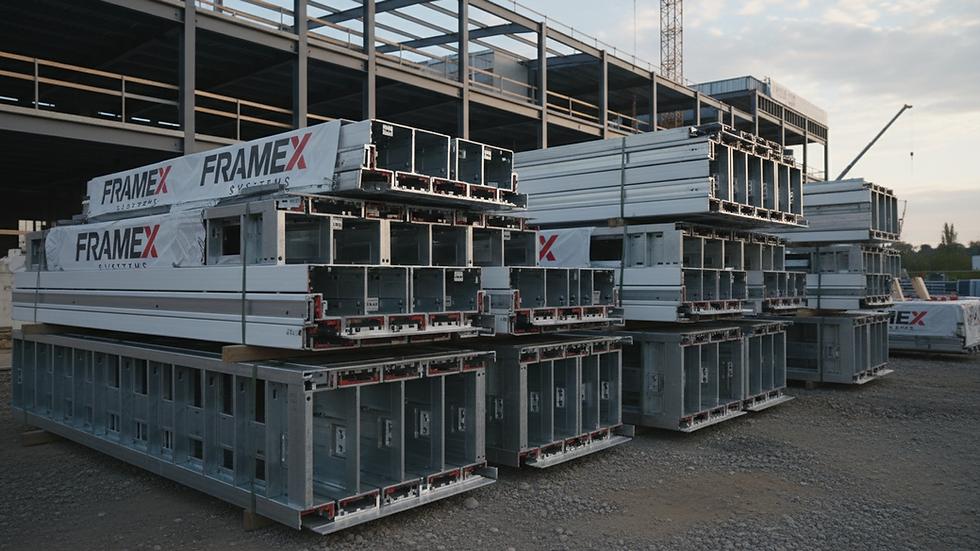
A complete system is what turns material advantages into project advantages. That is why firms like Frame X Systems focus on design assist, digital coordination, engineering, and manufacturing as one connected workflow rather than separate handoffs. The steel matters. The resolved system matters more.
If you are weighing framing options, start with the risks most likely to hurt the project - code complexity, labor constraints, tolerance issues, and schedule compression. The best framing choice is the one that solves those problems before they reach the site.


Comments