
Architects, developers, and contractors are shifting toward panelized CFS because it removes variables that stick framing can't control. Material waste, dimensional errors, and unpredictable field conditions disappear when panels arrive pre-cut, pre-punched, and labeled for their exact spot on the wall.
This article covers what CFS wall panels are, how they're manufactured, their real benefits, where they're used, how long they last, and what to look for in a manufacturing partner.
Key Takeaways
- CFS wall panels arrive pre-manufactured and installation-ready, built off-site to precise specs
- Steel resists fire, pests, rot, and moisture far better than wood, cutting long-term maintenance
- Panelized systems suit residential, commercial, institutional, and multifamily work where speed and code compliance matter
- An architect-led, BIM-coordinated manufacturing partner catches problems before they become RFIs
What Are Cold-Formed Steel Wall Panels?
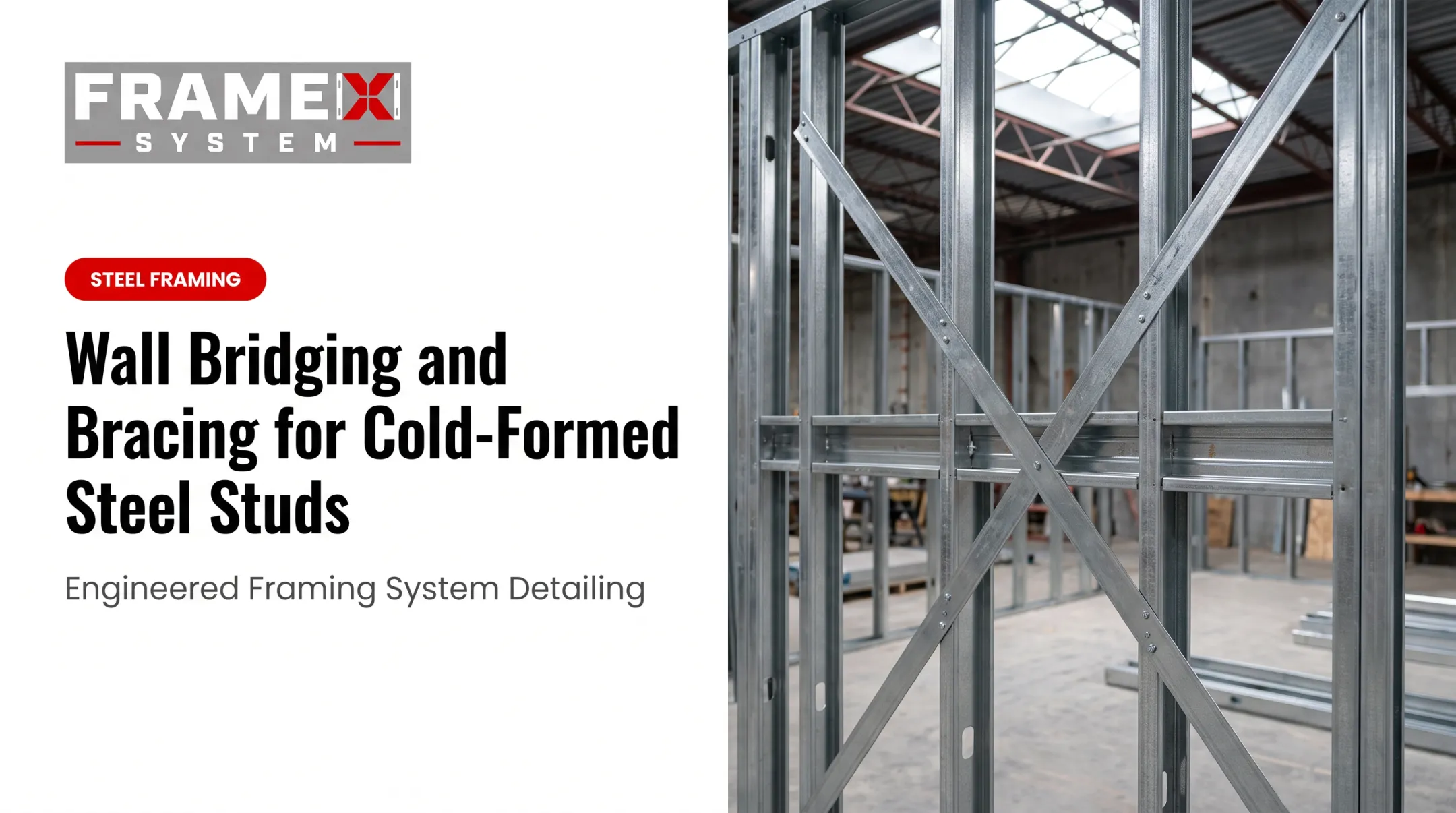
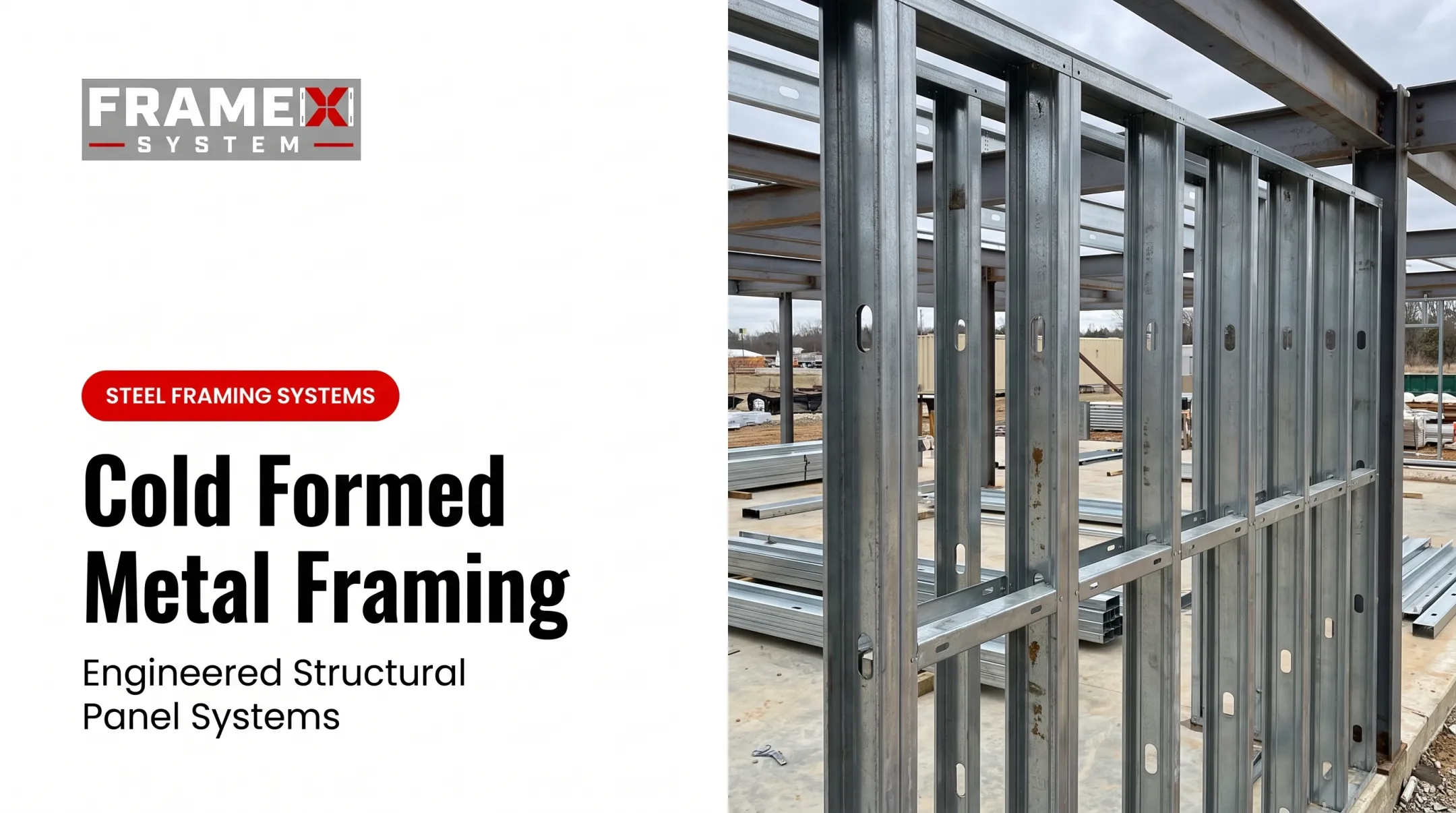
CFS wall panels are pre-assembled framing sections built from roll-formed steel studs and track, manufactured in a factory and shipped ready for crane placement or hand-erection. Instead of a crew building walls stick by stick on-site, the panel arrives as an assembled unit.
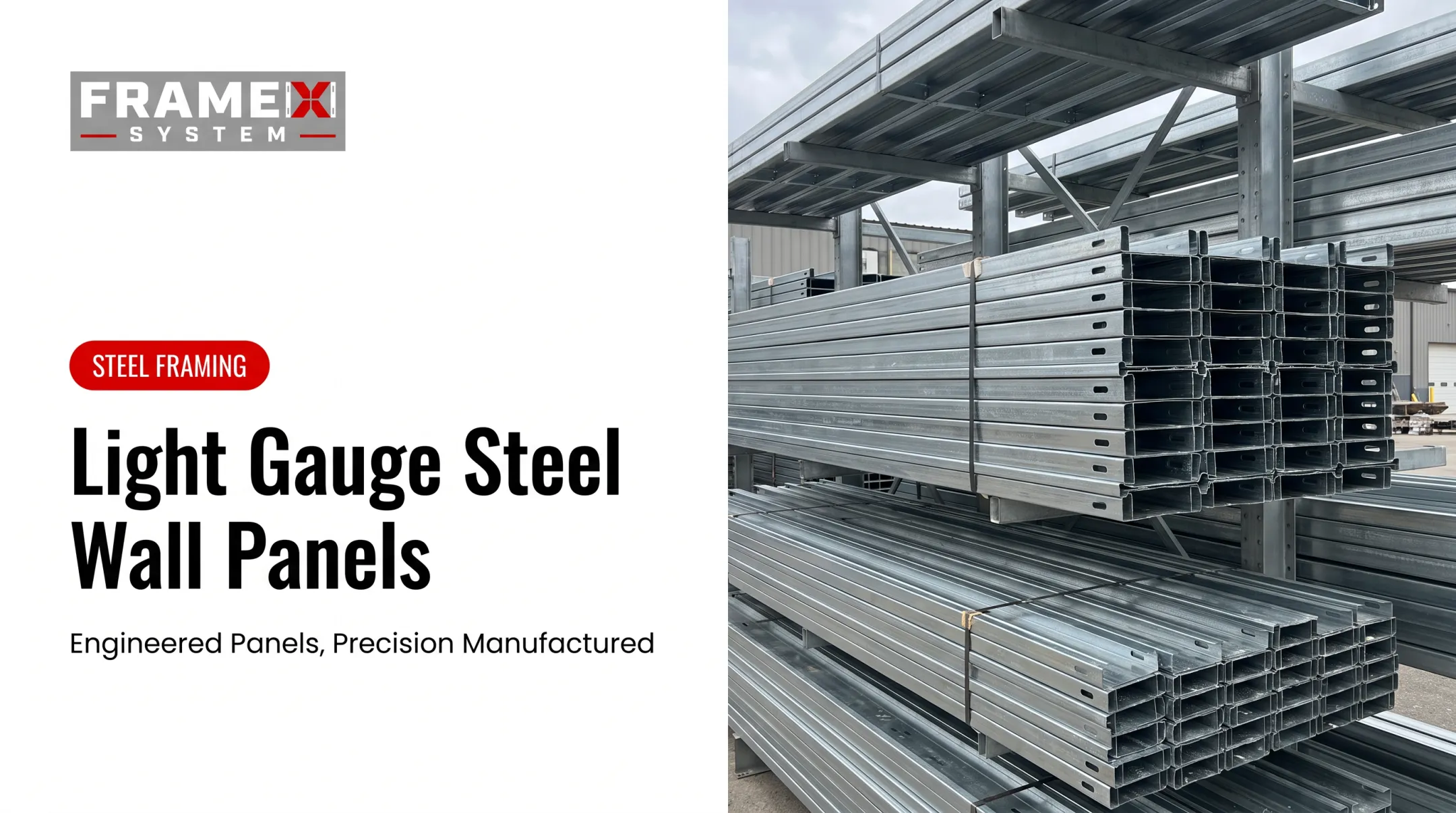
The "cold-formed" part matters. According to the Steel Framing Industry Association, steel coil is slit to width and roll-formed at room temperature through a series of dies into C, U, Z, or hat-shaped sections. No heat means no warping during production, which is why cold-formed members hold straighter, truer dimensions than hot-rolled steel shapes.
Typical panel components include:
- Vertical light-gauge steel studs
- Horizontal tracks at top and bottom
- Diagonal reinforcements for added lateral strength
- Galvanized coating for corrosion resistance
- Pre-drilled holes for assembly and trade coordination
At Frame X Systems, panels are engineered, labeled, bundled, and sequenced before they ever leave the factory floor. That sequencing is what lets a crew erect a wall section without guessing where it goes.

Types of Wall Panel Systems
Not every CFS panel does the same job. Load-bearing panels carry structural loads from floors and roofs above; non-load-bearing partition panels simply divide interior space and carry no vertical load.
Finish completeness also varies by manufacturer and project scope:
- Stud-only panels (framing skeleton, no sheathing)
- Panels with sheathing pre-attached
- Panels with windows or cladding already installed
The right configuration depends on project logistics, trade sequencing, and what the design team wants handled off-site versus in the field.
How Cold-Formed Steel Wall Panels Are Manufactured and Delivered
Panelized CFS doesn't start on a factory floor. It starts with coordination.
Design Coordination Before Fabrication
Before a single stud gets roll-formed, the project moves through architect-led design assist and a constructability review. This is where BIM coordination earns its value: the CFS framing gets checked against architectural, structural, and MEP systems to find clashes before they become field problems.
From there, structural engineers prepare project-specific shop drawings and coordinated panel layouts. The client reviews and approves those drawings. Only after approval does the team issue a stamped structural package and start manufacturing.
Factory Fabrication and Quality Control
Factory production follows a controlled sequence:
- Roll-form steel to exact engineered specs
- Punch openings where needed
- Assemble panels on framing tables
- Dimensionally verify, inspect, and label each panel for its install location before shipment
Delivery and Field Erection
Panels ship bundled and sequenced by installation zone, arriving in the order the crew needs them. This cuts jobsite congestion and reduces the guesswork that slows stick-built crews down.
Frame X Systems runs that same architect-led, BIM-coordinated path so constructability issues are closed before manufacturing—the point where RFIs and rework usually start. SFIA has documented a five-story apartment project where CFS framing shaved at least six weeks off the schedule compared to poured concrete or masonry.

Key Benefits of Cold-Formed Steel Wall Panels
Precision That Eliminates Waste
Factory-cut panels arrive at their designed dimensions. There's no on-site trimming, no warped studs to reject, no dumpster full of offcuts. Compare that to wood framing, where lumber's natural variability means field crews are constantly measuring, cutting, and correcting.
Built-In Durability
Steel doesn't rot, warp, or feed termites. According to SFIA, cold-formed steel resists termites in nearly any climate, and because steel is inorganic, it doesn't retain water or support mold growth the way wood does.
That means fewer callbacks and lower long-term maintenance costs, particularly in humid, coastal, or termite-prone regions.
Faster Installation, Smaller Crews
Panels arrive ready to set. With fewer field cuts and fewer on-site decisions, smaller crews move faster and close in the building envelope sooner.
Structural Performance in Harsh Conditions
Steel's strength-to-weight ratio and ductility make it well suited for high-wind and seismic regions. Structural CFS systems fall under AISI S240, and seismic force-resisting applications fall under AISI S400 per the 2024 International Building Code.
Potential Insurance Advantages
Non-combustible construction often gets a second look from underwriters. SFIA points to Zurich builders-risk premiums dropping 25% to 75% for steel-framed buildings. It also cites a Mason, Ohio hotel project where switching to CFS saved $1.32 million in builders-risk premiums alone.

These figures are project-specific, not guaranteed outcomes, but they're worth discussing with your insurer early.
Common Applications for Cold-Formed Steel Wall Panels
CFS panels fit projects where speed, repeatability, and code compliance matter most.
- Residential: Custom homes and multifamily housing with repetitive floor plans that benefit from panelized speed
- Commercial: Office, retail, and mixed-use projects that need predictable close-in schedules
- Institutional and religious: Schools, churches, and community buildings that need code compliance and long clear spans
- Rapid deployment and government: Projects where off-site manufacturing reduces field-timeline risk
One documented church project used CFS to achieve 70-foot clear spans and a 1,000-seat sanctuary, cutting construction costs by $5 million on a 34,000-square-foot build.
Frame X Systems has delivered framing systems for custom homes, commercial buildings, and large institutional structures—the project types where panelization pays off.
How Long Do Cold-Formed Steel Wall Panels Last?
Cold-formed steel wall panels with galvanized coatings are built for multi-generational service life. The NAHB Research Center's 2007 study tracked zinc-coated steel samples across seven years of exposure in Miami, Leonardtown, Maryland, and Long Beach Island, New Jersey.
The results were striking: estimated plate life ranged from 235 to 841 years based on nominal coating weights, averaging 490 years. Measured coatings pushed that average to 574 years.

What actually limits lifespan:
- Lifespan depends on proper detailing and moisture management, not just the steel itself
- Coating quality and thickness affect long-term performance
- Steel doesn't degrade the way wood does, but poor water management can still cause problems at connections and penetrations
The steel isn't the weak link—detailing is. When wall panels are paired with proper flashing, sealants, and drainage planes, the framing routinely outlasts cladding, finishes, and other building systems by a wide margin.
Choosing a Cold-Formed Steel Wall Panel Partner
Not every CFS supplier operates the same way. Some sell material and leave coordination to the contractor. Others, like Frame X Systems, work as an engineering-first partner that resolves constructability issues before construction starts.
What to evaluate when selecting a partner:
- BIM coordination capability — Does the manufacturer integrate architectural, structural, and MEP models before fabrication, or just build to a static drawing set?
- Stamped structural packages — Confirm engineered, professional-engineer-signed packages ship with every project.
- National delivery experience — Ask how panels are sequenced, labeled, and bundled for jobsite efficiency.
- Preconstruction collaboration — Look for a design-assist process that involves architects and contractors early, not after drawings are locked.
Frame X Systems built its Frame X System™ around this exact model: architect-led design, full BIM coordination, precision manufacturing, and sequenced national delivery. With 28+ years of experience and 150+ projects designed, the focus is a coordinated system that goes up without surprises.
Frequently Asked Questions
What are cold-formed steel wall panels?
Cold-formed steel wall panels are pre-manufactured, roll-formed steel framing assemblies built off-site to exact specifications. They ship ready for installation, reducing field labor and installation time.
How long do cold-formed steel wall panels typically last?
Galvanized coatings protect the steel from corrosion for decades, with research estimating service lives averaging 490 to 574 years under normal building-envelope exposure. Proper detailing and moisture management determine actual longevity.
Are cold-formed steel wall panels more expensive than wood framing?
Material costs can run slightly higher, with SFIA studies showing CFS framing costing about 2.61% more in some comparisons. Reduced labor, waste, and insurance savings often narrow or eliminate that gap.
Can cold-formed steel wall panels be used in residential construction?
Yes. Residential use is growing, especially for custom homes and multifamily projects in termite-prone, coastal, or fire-risk regions where wood framing carries more long-term maintenance risk.
Do cold-formed steel wall panels meet fire and seismic codes?
Yes. Cold-formed steel is non-combustible and ductile, and structural CFS systems are governed by AISI standards referenced directly in the International Building Code for fire and seismic compliance.
How are cold-formed steel wall panels different from traditional metal stud framing?
Traditional metal stud framing is assembled piece by piece on-site, like wood stick framing. CFS wall panels arrive pre-assembled as complete sections, ready to set in place with far less field labor.